
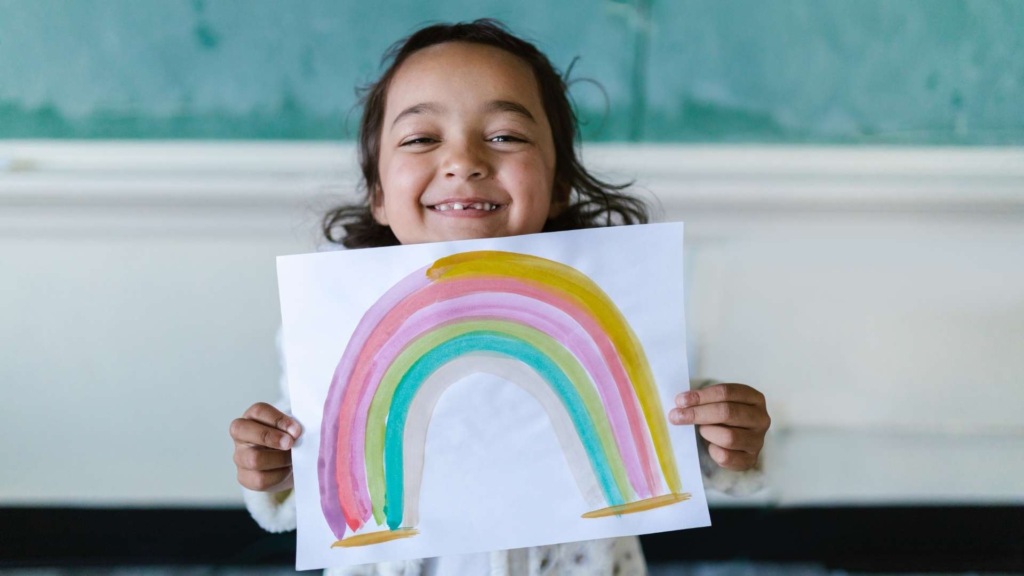
Finding the right preschool can feel like one of the biggest decisions you make as a parent. Your child is leaving the comfort of home or a smaller care setting and stepping into a world of new friends, routines, and learning experiences. This guide walks through what preschool actually looks like, why quality matters, and what to consider when choosing a program for your family.
Key Takeaways
- Preschool (typically ages 3–5) bridges the gap between toddler care and kindergarten, with a focus on play-based learning, social skills, and early academics. Quality preschool programs focus on the whole child for long-term success, not just isolated skills.
- High-quality preschool programs, like those at Children’s Learning Center in High Ridge, Missouri, combine nurturing care, structured routines, and curriculum-guided activities that support every stage of development.
- Strong classroom management and center-wide safety practices help children feel secure enough to explore, try new things, and build independence. Accreditation, qualified teachers, and open family communication are reliable markers of a trustworthy center.
- Preschool is especially important for kindergarten readiness, supporting early literacy, math, self-help skills, and the confidence children need to thrive in a group setting.
What Is Preschool and Who Is It For?
Preschool is an early childhood education stage designed for children roughly ages 3 to 5, before formal kindergarten begins. It is the environment where children learn foundational skills through guided play, structured routines, and social interaction with peers.
Most programs organize children by age and developmental readiness:
- Early preschool typically serves children ages 2–3, focusing on language, independence, and basic social development.
- Pre-K covers ages 3–5, with more structured preparation for school routines, early literacy, and math.
- Some centers, like Children’s Learning Center in High Ridge, Missouri, serve a full continuum from infants (6 weeks) through school-age (up to 12 years), with dedicated preschool classrooms at each stage.
In 2022, 68% of 4-year-olds in the U.S. attended preschool, reflecting a growing understanding among families that these early years matter. In communities like High Ridge, parents often seek trusted, neighborhood-based preschool centers where their kids are known by name rather than large, impersonal schools.
Benefits of a Quality Preschool Program
The preschool years are a critical window for brain development, language growth, and forming early attitudes toward learning. Quality preschool introduces early literacy and math concepts through play-based learning, giving children a natural on-ramp to more formal education.
Here’s what the research consistently shows:
- Stronger social skills. Children practice sharing, turn-taking, empathy, and cooperation daily.
- Academic foundations. Story time builds vocabulary. Counting games build number sense. Art projects foster creativity and fine motor skills.
- Self-regulation. Preschool helps children build self-reliance, emotional regulation, and self-esteem through consistent routines and supportive relationships.
- Smoother transitions. Children who attend quality programs enter kindergarten more confident and comfortable with group learning.
Preschool programs support language, social-emotional development, physical skills, and problem-solving, covering far more than ABCs and 123s. Longitudinal research from programs like the Chicago Child-Parent Centers found that two years of preschool attendance led to lower rates of special education placement and reduced juvenile crime. Research also shows preschool attendees score higher in cognitive assessments, and preschool education can lead to higher earnings and reduced social costs over a lifetime. High-quality preschools improve long-term learning outcomes for children precisely because they address the whole child.
At Children’s Learning Center, the preschool program is curriculum-guided and play-based, designed to support each child’s physical, social, emotional, and intellectual development across the full life cycle of early childhood.
Types of Preschool Centers and Programs
Preschool centers are licensed facilities dedicated to early learning and care, often serving multiple age groups under one roof. Parents encounter several common models when exploring options:
- Play-based programs emphasize child-led exploration, creativity, and social development through centers, outdoor play, and hands-on activities.
- Academic-leaning programs focus more heavily on structured literacy and math instruction, sometimes resembling elementary school routines.
- Montessori and Reggio Emilia-inspired programs encourage self-directed learning, mixed-age classrooms, and creative expression.
- Faith-based programs integrate religious education alongside early childhood learning.
- Head Start is a federally funded preschool program, supported by the federal government, aimed at promoting school readiness for children from low-income families. Public schools in some districts also offer state-funded Pre-K.
Missouri’s preschool landscape is evolving. In 2024–2025, the state enrolled about 18,264 children in preschool programs, nearly double previous years, with state spending around $56.5 million. New grants like Missouri Quality Preschool (MOQPK) now extend funding to licensed private child care providers, not just public school districts.
Children’s Learning Center is positioned as a Missouri-accredited, play-based, curriculum-guided option with a strong focus on development and family partnership. A play-based curriculum encourages exploration, creativity, and social development, rather than a one-size-fits-all model.
Inside a Preschool Classroom: Daily Routines and Activities
Walk into a preschool classroom on a typical morning, and you will find a room filled with purposeful activity. Arrival, center-based play, group circle time, snack, outdoor play, and small-group activities create a rhythm that preschoolers quickly learn to anticipate.
Center-based choices might include:
- Blocks and construction – building towers and bridges that develop spatial reasoning and fine motor control
- Dramatic play – a pretend kitchen or dress-up area where children practice language and cooperation
- Art easels and sensory tables – drawing, painting, and exploring textures that let preschoolers develop fine motor skills through drawing and building activities
- Quiet book corners – where children explore stories and early literacy on their own terms
At Children’s Learning Center, the Dragonflies classroom (ages 2–3) uses weekly themes, science explorations, and guided center time. The Butterflies classroom (ages 3–5) adds structured group activities, early writing practice, and simple math games. Classroom environments are safe, clean, and stimulating for children, with materials rotated to keep curiosity alive.
Routines are predictable but flexible. Children feel safe knowing what comes next, while teachers create space for child-led exploration and discovery throughout the day.
How Preschool Builds Social Skills and Emotional Growth
Social-emotional learning is a core outcome of preschool, not just an “extra.” These skills are closely linked to long-term school success, and the daily interactions of a preschool classroom are where they take root.
Every day, children learn social skills through play in preschool settings:
- Sharing toys at a sensory table
- Waiting for a turn on the slide during outdoor play
- Helping a friend zip a coat or find a missing shoe
Preschool teaches children to share, cooperate, and resolve conflicts with guidance from educators. Children learn to recognize and manage emotions in preschool, and they learn to control emotions and impulses through play. Teachers support this process by helping children name their feelings, using calm-down areas in the room, and modeling problem-solving language (“I see you’re frustrated. Let’s try using our words.”).
High-quality preschools promote play-based learning for social skills, which is why Children’s Learning Center emphasizes building friendships and classroom community. Teachers guide children through conflicts rather than simply stopping behavior, giving kids the tools to handle disagreements with peers on their own over time. Strong social skills learned in preschool reduce anxiety about starting kindergarten and help students participate confidently in group learning.
Early Academics: Kindergarten Readiness in Preschool
Preschool academics are about foundations, not formal worksheets or pressure. The idea is exposure and readiness, building comfort with letters, numbers, and language so that the transition into kindergarten feels natural.
Key readiness areas include:
- Early literacy – recognizing their own name, enjoying stories, exposure to letters and sounds
- Math – counting objects, comparing sizes, identifying simple patterns, exploring a science lab approach to measuring and experimenting
- Language – expressing needs in full sentences, following multistep directions, participating in group discussions
Play-based lessons naturally incorporate these learning goals. Counting blocks while building, measuring ingredients during a simple cooking activity, or sorting objects by color all embed math and science concepts into daily play.
Preschool education helps children build confidence and independence. Engaged teachers communicate effectively with children during activities, guiding without hovering. At Children’s Learning Center, the Butterflies Pre-K classroom purposely builds literacy, math, independence, and confidence through structured group times and small-group instruction.
Readiness also includes self-help skills: putting on coats, using the restroom independently, managing lunch routines, and keeping track of personal belongings. Parents can practice these at home to reinforce what children develop in the classroom.
Classroom Management in Preschool: Creating a Calm, Joyful Space
Classroom management, in simple terms, is how teachers organize the room, routines, and expectations so children feel safe, know what to do, and can focus on learning through play. It is not about control or discipline charts. It is about creating an environment where children can thrive.
Effective preschool-appropriate strategies include:
- Visual schedules posted at children’s eye level, showing the day’s flow with pictures
- Simple class rules illustrated with images (“Walking feet,” “Gentle hands”)
- Transition songs and timers that signal cleanup, snack, or outdoor time
- Consistent routines for arrival, rest, and departure that reduce confusion and lower the noise level
- Calm-down corners where children can self-regulate with books, soft toys, or breathing exercises
Student-teacher ratios in preschools are ideally about 15 students per group, and low teacher-to-child ratios promote individualized attention for children. Research from the Institute of Education Sciences confirms that explicit teaching of expectations, visual supports, and consistent routines are among the most effective ways to reduce behavior problems and protect learning time.
At Children’s Learning Center, teachers use warm, relationship-based approaches. They greet each child by name, offer choices throughout the day, and guide behavior calmly. Regular observation helps identify children who may need additional support, and the teaching team adjusts its practice to meet each child’s needs.
Health, Safety, and Accreditation in Preschool Centers
Health and safety are non-negotiable priorities for any preschool center, especially for families entrusting children as young as age 2 or 3 to a group care setting.
Safety measures parents should look for:
- Secure entry systems (keypad or controlled access)
- Sign-in and sign-out tracking (such as KinderConnect)
- Clear supervision policies and emergency procedures
- No unsupervised access to the building by visitors
Health practices that matter:
- Regular handwashing protocols throughout the day
- Cleaning and sanitizing toys, desks, and high-touch surfaces
- Allergy-aware snack and meal policies
- Daily wellness routines as part of preschool health and safety measures
Preschool programs focus on maintaining clean learning spaces because illness spreads fast in group settings. In England, preschools must follow the Early Years Foundation Stage standards, and similar frameworks guide quality expectations in the U.S. at both the state and federal level.
Missouri Accreditation (MOA) recognizes child care programs that meet high quality standards for curriculum, environment, staffing, health, safety, and nutrition. Children’s Learning Center is both state licensed and MOA accredited, signaling ongoing quality review that gives families added peace of mind. Accreditation is not a one-time event. It involves continuous assessment by an independent department of reviewers who evaluate every dimension of a center’s operation.
How Children’s Learning Center Approaches Preschool in High Ridge, Missouri
Children’s Learning Center offers a full continuum of care from infants (6 weeks) through school-age (up to 12 years), with dedicated early preschool and Pre-K classrooms tailored to each stage of development.
Key features of the preschool program include:
- Curriculum-guided, play-based learning with center-based activity choices that let children explore at their own pace
- Dragonflies classroom (ages 2–3, early preschool) – focused on communication, cooperation, motor development, reasoning, and independence
- Butterflies classroom (ages 3–5, Pre-K) – building early literacy, math, structured group activities, social skills, and confidence for kindergarten
- Included meals, snacks, and classroom materials as part of weekly tuition, so families don’t face hidden costs
- Secure building access, security cameras, and monitored safety measures throughout the administration of the center
Quality preschool involves partnerships with families to support learning. Parents should look for warm, responsive teachers in preschool programs, and that is exactly the perspective Children’s Learning Center brings to every interaction. Teachers communicate with families through updates and work together to create a sense of belonging for each child.
Families in or near High Ridge, Missouri, can learn more about the preschool program at https://clc-mo.com/programs/ or schedule a tour through https://clc-mo.com/contact/.
Choosing the Right Preschool Program for Your Child
Choosing a preschool is a significant educational decision. Every child and family is different, so the right program will match your child’s temperament, your schedule, and your shared values about learning and care.
Practical questions to ask on a tour:
- How do teachers handle behavior challenges and guidance in the classroom?
- What does a typical day look like from arrival to pickup?
- How do you communicate with families about a child’s progress?
- Are you licensed and accredited? (Look for Missouri Accreditation or equivalent.)
- What training and education do your educators have?
What to observe during a visit:
- Are children engaged, comfortable, and actively participating?
- Are teachers at eye level, speaking kindly, and interacting with small groups?
- Does the environment feel warm, organized, and inviting?
- Is there a balance of free play and structured learning?
Families near High Ridge should include Children’s Learning Center on their list of visits. Compare the warm, play-based environment with other preschool centers in the area and trust what you see and feel during your time in the classroom. The current situation for preschool access and funding in Missouri is improving, which means families have more resources and options than ever before. The demand for quality programs continues to grow, and taking the time to enroll your child in the right setting makes a meaningful difference.
Frequently Asked Questions About Preschool
What age should my child start preschool?
Many children begin early preschool around age 2 and move into more formal Pre-K between ages 3 and 4, depending on readiness and local kindergarten cutoff dates. At Children’s Learning Center, the Dragonflies classroom serves ages 2–3 and the Butterflies Pre-K classroom serves ages 3–5, giving families flexible entry points. Consider your child’s language skills, comfort separating from caregivers, and interest in playing with peers when deciding on the right time. In 2022, 68% of four year olds in the U.S. attended preschool, showing that most families see this as a valuable step before kindergarten.
How is preschool different from daycare?
Daycare typically emphasizes safe supervision and care during working hours, while a preschool program adds an intentional, curriculum-guided learning component throughout the day. Preschool includes structured activities that build social skills, early literacy, math, and self-help skills alongside free play. Children’s Learning Center is an example of a center that provides both dependable child care hours and a strong early learning focus in each classroom, blending the best of both worlds.
How can I help my child adjust to their first days of preschool?
Start by visiting the classroom together before the first day. Read picture books about starting school and practice short goodbyes at other familiar places. Create a simple, consistent drop-off routine – a hug, a wave at the window, and then letting teachers take over. At Children’s Learning Center, teachers partner with families during the transition period, offering updates and reassurance as children settle in. Most kids find their rhythm within the first week or two.
What questions should I ask when touring a preschool center?
Ask about teacher-to-child ratios, staff training requirements, how discipline and classroom management are handled, and how the center communicates with parents. Ask about accreditation (such as Missouri Accreditation), daily schedules, outdoor play time, and how special needs or allergies are addressed. At Children’s Learning Center, parents can ask to see curriculum materials for the Dragonflies and Butterflies classrooms and learn how staff identify and individualize learning for each child in the class.
Does my child need preschool to be ready for kindergarten?
Preschool is not legally required, but high-quality preschool significantly boosts most children’s readiness for kindergarten in areas like social skills, independence, and early academics. A preschool program helps children get comfortable in group settings, follow routines, and build confidence speaking up in class. Preschool education in Ireland increased enrollment to about 93% after the introduction of free access, demonstrating the global importance of early education. Children’s Learning Center’s Pre-K classroom is specifically designed to prepare children ages 3–5 for a smooth, confident transition into local kindergartens in and around High Ridge. High-quality preschools often use play-based learning methods that develop the whole child, giving kids an important part of the foundation they will carry through every history of their education, from their world of early art and science to the office and beyond.